

Chemical Peel vs. SkinPen Microneedling vs. Facial: Which Is Best for Your Skin?
You know what you want your skin to look and feel like: smoother, clearer, more even, and well hydrated. Yet choosing the treatment that can move you toward that goal is not always simple. Should you book a facial, resurface your skin with a chemical peel, or invest in SkinPen microneedling?
The best choice depends less on which treatment sounds most advanced and more on where your concern begins. A professional facial primarily cleanses, exfoliates, and hydrates the surface. By comparison, a chemical peel removes selected outer layers to encourage renewal, while SkinPen creates controlled microchannels that prompt collagen remodeling.
In other words, each treatment works at a different level of the skin's architecture. This chemical peel vs. microneedling vs. facial comparison will help you match the right tool to fine lines, acne scars, discoloration, dryness, and uneven texture while weighing downtime, cost, and candidacy.
Important: The chemical peel information below refers mainly to professional light and medium-depth peels. Deep phenol peels involve substantially more risk, recovery, and medical oversight, so they do not belong in the same practical comparison as a customized facial or SkinPen treatment.
What Is the Difference Between a Facial, Chemical Peel, and SkinPen?
A professional facial is the gentlest and most flexible option. For example, most facials include cleansing, surface exfoliation, hydration, and products selected for your skin; some add steam, extractions, or masks. Therefore, a facial often makes sense for dryness, congestion, maintenance, or a healthy glow with little interruption to your schedule. Cleveland Clinic's overview of professional facials explains how providers customize these noninvasive treatments.
A chemical peel provides controlled resurfacing. Depending on the formula and depth, it can target dullness, acne, fine lines, uneven tone, and sun damage. Meanwhile, light peels work mainly within the epidermis; medium peels reach the upper dermis and require more recovery. The Mayo Clinic's chemical peel guidance explains why greater depth can bring more change, discomfort, downtime, and risk.
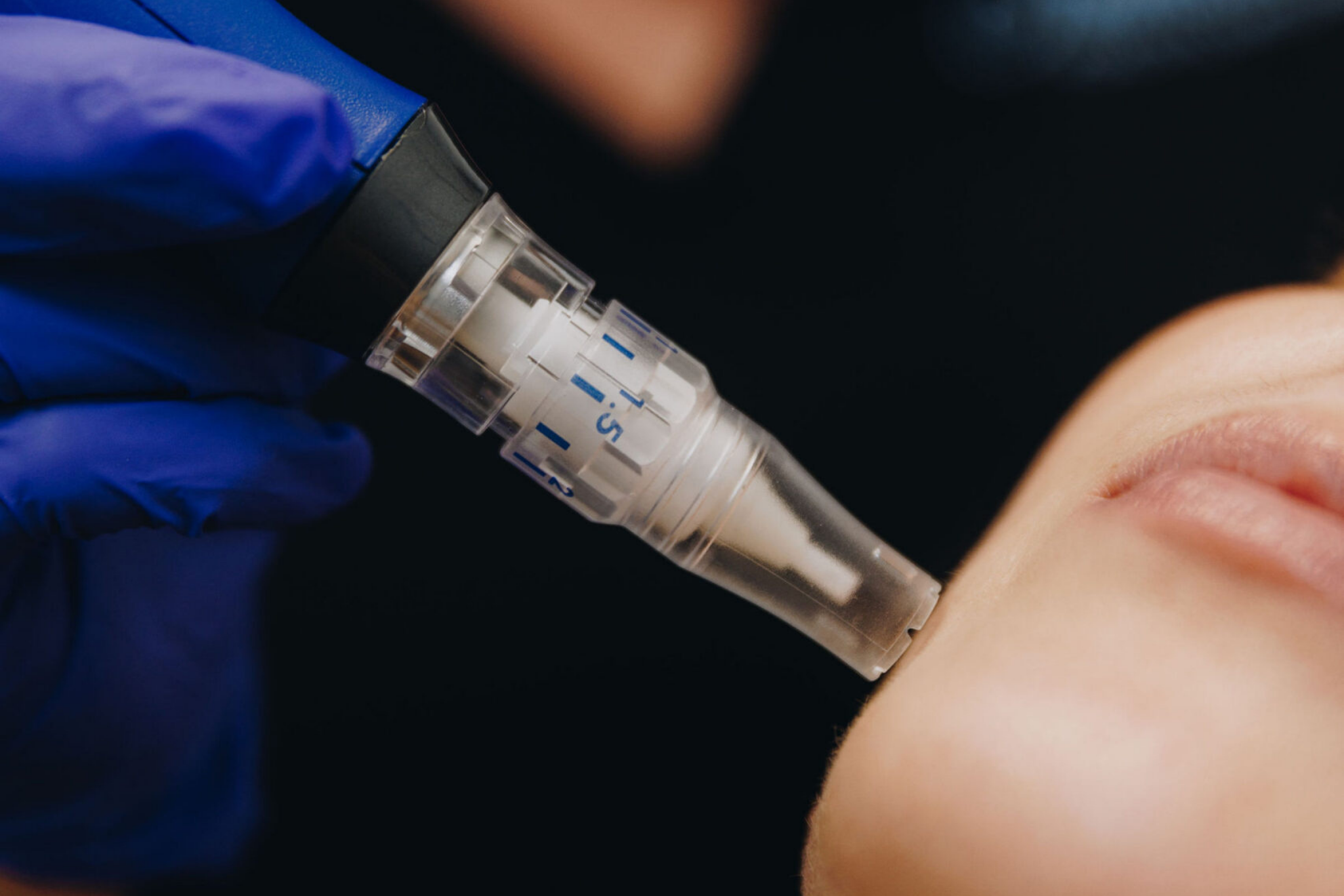
SkinPen microneedling works differently. The device makes precise microchannels that activate a healing response and support new collagen. In fact, FDA-cleared uses for microneedling devices include improving facial acne scars and facial or neck wrinkles in adults age 22 and older. Foundation explains more about SkinPen collagen remodeling and rejuvenation.
None of these options is universally “better.” Instead, the best treatment is the one whose depth, mechanism, and recovery requirements fit your concern.
Which Treatment Is Best for My Skin Concern?
Therefore, the chart below gives you a practical starting point. However, skin type, medical history, current medications, and the depth of your concern can change the recommendation.
Which Treatment Is Best for My Skin Concern?
| Skin concern or decision factor | Professional facial | Chemical peel | SkinPen microneedling |
| Fine lines and wrinkles | Best for temporary plumping and softening caused by hydration; limited effect on established wrinkles | Good for fine surface lines; results depend on peel depth | Often the strongest of the three for collagen-based improvement in fine lines and textural aging |
| Active acne | Often helpful for congestion, blackheads, whiteheads, hydration, and a supportive routine; extractions must be appropriate | Can help selected types of acne and clogged pores when the acid and depth fit the skin | Usually postponed during inflamed, painful, pustular, or otherwise active acne; SkinPen labeling lists active acne among populations not evaluated |
| Acne scars | Does not remodel indented scars, although it can support clearer, healthier-looking skin | May improve discoloration and mild surface irregularity; deeper scars usually need another approach | Frequently the best match for atrophic or indented facial acne scars after active acne is controlled |
| Hyperpigmentation and sun damage | May brighten mild dullness or superficial discoloration, depending on the exfoliation used | Often the most direct choice for surface pigment and sun damage | May improve uneven tone, but treatment must be selected carefully for pigment-prone skin |
| Dry or dehydrated skin | Usually the best first choice because hydration and barrier support can be prioritized | A gentle peel may help selected dry skin, but stronger peels can temporarily increase dryness and irritation | Not primarily a hydration treatment; dryness or a damaged barrier may need attention first |
| Uneven texture | Helpful for mild roughness and surface buildup | Strong for rough, dull surface texture | Strong for acne-scar texture, enlarged-looking pores, and concerns linked to collagen loss |
| Discomfort | Usually low; extractions may create brief pressure | Mild stinging with a light peel; stronger burning or stinging with deeper peels | Topical numbing is typically used; many people feel pressure, vibration, or prickling |
| Downtime and peeling | Usually none beyond short-lived redness or sensitivity | About 1-7 days for many light peels and 7-14 days for medium peels; visible flaking varies | Redness, warmth, tightness, or swelling for a few days; reactions can sometimes last up to a week |
| Treatments typically needed | One can refresh the skin; every 4-6 weeks is common for ongoing support | Often 3-5 light peels, spaced about 2-5 weeks apart; medium-peel plans vary | Commonly a series, especially for scars; the number and interval should follow the device protocol and your provider's plan |
| Estimated cost per treatment | Often about $75-$200 locally; advanced facials can reach $275 or more | Often about $100-$150 for light peels and $200-$400 for medium peels in Albuquerque | Published local SkinPen or medical microneedling examples are about $275-$359; broader New Mexico pricing may reach roughly $650 |
| Usually the best fit for | Hydration, maintenance, congestion, mild dullness, and minimal downtime | Surface pigment, sun damage, mild acne, fine lines, and roughness | Acne scars, collagen loss, fine lines, enlarged-looking pores, and deeper textural concerns |
These are August 2026 Albuquerque and New Mexico planning estimates, not Foundation's fee schedule. Treatment area, peel depth, products, add-ons, expertise, and packages can change the total.
How Do the Three Treatments Compare for Wrinkles, Acne, Pigment, Dryness, and Texture?
The chart offers the short answer. Still, the reasoning can keep you from choosing a treatment that does not match the problem.
Fine lines and wrinkles
If dryness makes fine lines more noticeable, a hydrating facial may create the quickest refresh. However, that change comes mainly from moisture rather than structural remodeling.
Meanwhile, a chemical peel can soften fine surface lines. By contrast, SkinPen microneedling often fits better when collagen loss and persistent texture play a larger role. Because the FDA distinguishes uses by device, your provider should explain how your concern fits the SkinPen protocol.
Acne and acne scars
For blackheads, whiteheads, or routine acne support, a customized facial or peel may be a logical beginning. Nevertheless, deep or inflamed acne needs thoughtful evaluation; aggressive extractions or needling can worsen inflammation.
Once active acne is controlled, SkinPen may become the stronger choice for indented scars because it encourages collagen remodeling. A peel may fit better when the “scar” is mainly post-acne discoloration. Therefore, the choice between a chemical peel vs. microneedling often comes down to pigment versus indentation.
Hyperpigmentation and sun damage
Chemical peels often lead this category because providers can select acids and depths that target pigment and surface damage. Even so, more intensity is not automatically better. Darker skin tones and anyone prone to post-inflammatory hyperpigmentation need an experienced provider because a peel can also cause unwanted color changes.
Similarly, SkinPen may help some uneven-tone concerns without using heat. However, melasma can behave unpredictably, so assessment should come first. By comparison, a facial offers the gentlest option for mild dullness but usually less correction than a well-matched peel.
Dry or dehydrated skin
When the skin barrier feels tight, flaky, or depleted, a facial usually offers the best first step. Your provider can emphasize replenishing ingredients instead of asking stressed skin to heal from a stronger procedure.
Some light peels may suit dry skin. Still, a peel can intensify flaking, and microneedling does not replace water or lipids in the barrier. Consequently, improving hydration first may support later corrective work.
Uneven texture
Surface roughness may respond to a facial or light peel. Meanwhile, deeper irregularity from acne scars or collagen loss generally points toward SkinPen. When discoloration and indented scars coexist, a staged plan may use more than one modality.
What Should I Expect for Discomfort, Downtime, and Peeling?
A professional facial typically has the easiest recovery. You may leave with a temporary flush after exfoliation or extractions, but most people resume normal activities immediately. Because formulas differ, mention upcoming events and skin sensitivity.
Chemical peel recovery depends on depth. During a light peel, you may feel tingling or mild stinging. Afterward, redness and scaling can last several days, although not every peel produces dramatic visible shedding. According to the American Academy of Dermatology's chemical peel guidance, healing often takes 1-7 days after a light peel and 7-14 days after a medium peel.
Before SkinPen microneedling, topical anesthetic generally reduces discomfort. Afterward, your skin may look red or feel warm, tight, tender, or mildly swollen. The FDA's microneedling safety overview notes that reactions can resolve over days or, less commonly, weeks.
No matter which corrective treatment you choose, careful sun protection matters. Albuquerque's strong year-round sun can deepen irritation-related discoloration and undermine the change you worked to create.
How Many Treatments Will I Need, and What Will the Full Plan Cost?
A facial can produce a cleaner, softer, more hydrated appearance after one visit. For ongoing concerns, many people schedule professional facial care every four to six weeks, then adjust as their skin becomes more stable.
Light chemical peels often work cumulatively. The AAD notes that three to five may be needed, commonly every two to five weeks. Medium peels may require fewer sessions but demand longer recovery.
SkinPen also tends to work as a series because collagen remodeling unfolds gradually. For acne scars, the AAD notes that plans may involve three to five sessions. Results develop over weeks to months.
Therefore, compare the cost of the plan, not only one appointment. Three $300 treatments differ from one $120 facial, but they also serve different purposes. Repeated facials may cost less per visit without remodeling an indented scar.
When comparing chemical peel vs. microneedling costs, ask about the treatment area, numbing, post-care products, follow-up, add-ons, and series pricing. Then weigh the total against your concern, recovery, and realistic degree of change.
Who Should Avoid or Postpone Each Treatment?
Good aesthetic care is not simply knowing what to do. It is also knowing when the skin is asking for restraint.
You may need to avoid or postpone a chemical peel during pregnancy, after recent isotretinoin use, with keloid risk, frequent cold sores, active infection, open skin, or significant sunburn. Medications, recent procedures, pigment history, and sun-protection habits also matter. The AAD recommends disclosing medicines, cold sores, scarring, supplements, and prior cosmetic treatments.
SkinPen's instructions rule out treatment for active skin cancer in the area; open wounds, sores, or irritation; stainless-steel or anesthetic allergy; bleeding disorders; pregnancy or nursing; and current isotretinoin use. Precautions also cover active acne, eczema or psoriasis, diabetes, immunosuppression, infection, keloids, anticoagulants, and poor wound healing. These cautions make medical screening essential; consult the current SkinPen Precision Elite instructions for full wording.
A professional facial has fewer universal restrictions because providers can modify it. Still, postpone or simplify treatment for infection, open wounds, severe sunburn, an inflammatory flare, or recently treated skin. Also disclose allergies, pregnancy, medicines, injectables, waxing, lasers, peels, and microneedling because the term “facial” covers many techniques.
How Can Foundation Help Me Choose the Right Skin Treatment in Albuquerque?
Choosing a chemical peel vs. microneedling vs. facial should begin with a conversation, not a trend. At Foundation Health & Wellness, Jalayne Faulhaber, CNP, MEP-C, and the aesthetics team take a conservative, personalized approach. They consider your skin, health history, goals, timeline, tolerance for downtime, and previous treatments before recommending a path.
That guidance matters because one concern can disguise another. Dryness can deepen the look of lines, active breakouts may need control before scar remodeling, and a dark mark needs a different strategy from an indented scar. A thoughtful assessment separates these layers.
You can also explore Foundation's aesthetic treatments in Albuquerque and its guide to the benefits of professional facials before your visit.
Frequently Asked Questions
Can I combine a chemical peel, SkinPen, and a facial?
Possibly, but usually not during the same appointment and never without a coordinated plan. A provider may use facials for barrier support and maintenance, then schedule peels or SkinPen at separate intervals for corrective work. Proper spacing gives the skin time to heal and lowers the chance of excessive irritation.
Is a chemical peel or SkinPen better for acne scars?
SkinPen is often the better match for indented facial acne scars after active acne is controlled. A chemical peel may be more useful when the main issue is post-acne discoloration or mild surface irregularity. Some patients benefit from a staged plan that addresses both pigment and texture.
Is SkinPen the same as radiofrequency microneedling?
No. SkinPen is mechanical microneedling and does not deliver radiofrequency heat. Because the devices work differently, their indications, risks, and recovery profiles should not be treated as interchangeable.
Which treatment is safest for darker skin tones?
The right answer depends on the concern and the provider's experience. SkinPen is cleared for facial acne scars in adults across all Fitzpatrick skin types, while chemical peels can also be used in skin of color when a skilled provider selects the peel carefully. However, both inflammation and overly aggressive treatment can contribute to pigment changes, so individualized planning is especially important.
Choose the Treatment That Matches the Layer of the Problem
If your skin mainly needs hydration or gentle clearing, consider a professional facial. If sun damage, discoloration, mild acne, or surface roughness leads, a chemical peel may offer the more direct route. However, indented acne scars, collagen loss, or persistent texture may point toward SkinPen microneedling.
Ultimately, the most useful chemical peel vs. microneedling vs. facial answer is personal. Your skin is not a trend or template; it is a living record of health, environment, and history.
Book an aesthetics consultation with Foundation Health & Wellness in Albuquerque to clarify which treatment fits your concern, comfort level, timeline, and skin health.