


Low Libido Isn’t “Just Stress”: What’s Really Behind a Fading Sex Drive (and What Helps)
The best treatment for low libido depends on why your sex drive dropped. Depending on the cause, that can mean balancing hormones (estrogen, progesterone or testosterone), changing a medication, treating erectile dysfunction or vaginal dryness, or improving sleep, stress and relationship strain. In most cases, you need a thorough evaluation to find the cause before a treatment will actually work.
If your desire for intimacy has faded, you’re far from alone. You also don’t have to accept it as “just getting older.” Low libido is one of the most common concerns people bring to their healthcare provider, and it’s also one of the most commonly brushed off. Too many people hear “your labs look fine” or “that’s normal at your age” and leave with no answers and no plan.
At Foundation Health & Wellness, we see it differently. Your sex drive often tells you something about your overall health, so it deserves the same curiosity and care as any other symptom. This guide covers the most common causes of low libido in women and men, how hormones fit in, and which treatments are available. It also explains what to expect when you book a confidential sexual health consultation.
If this feels like an awkward topic to bring up, you’re in good company. Plenty of people wait months before mentioning it to anyone, often because they’re not sure it “counts” as a medical concern. It does. Our job is to make the conversation easy: no judgment, no rushing and no question that’s too personal.
What Is Low Libido, Exactly?
Low libido means a drop in sexual desire, or a lasting lack of it, that bothers you. There’s no “correct” amount of desire. What matters is whether the change feels like a loss and affects your confidence, your relationship or your quality of life.
Clinicians sometimes use the term hypoactive sexual desire disorder (HSDD) when low desire lasts for months and causes distress. You don’t need a formal diagnosis to deserve help, though. If you’ve noticed that you:
- rarely or never think about sex anymore
- avoid intimacy, or feel relieved when it doesn’t happen
- feel disconnected from your body or your partner
- miss the person you used to be in this part of your life
…then it’s worth talking to a provider.
What Causes Low Libido in Women and Men?
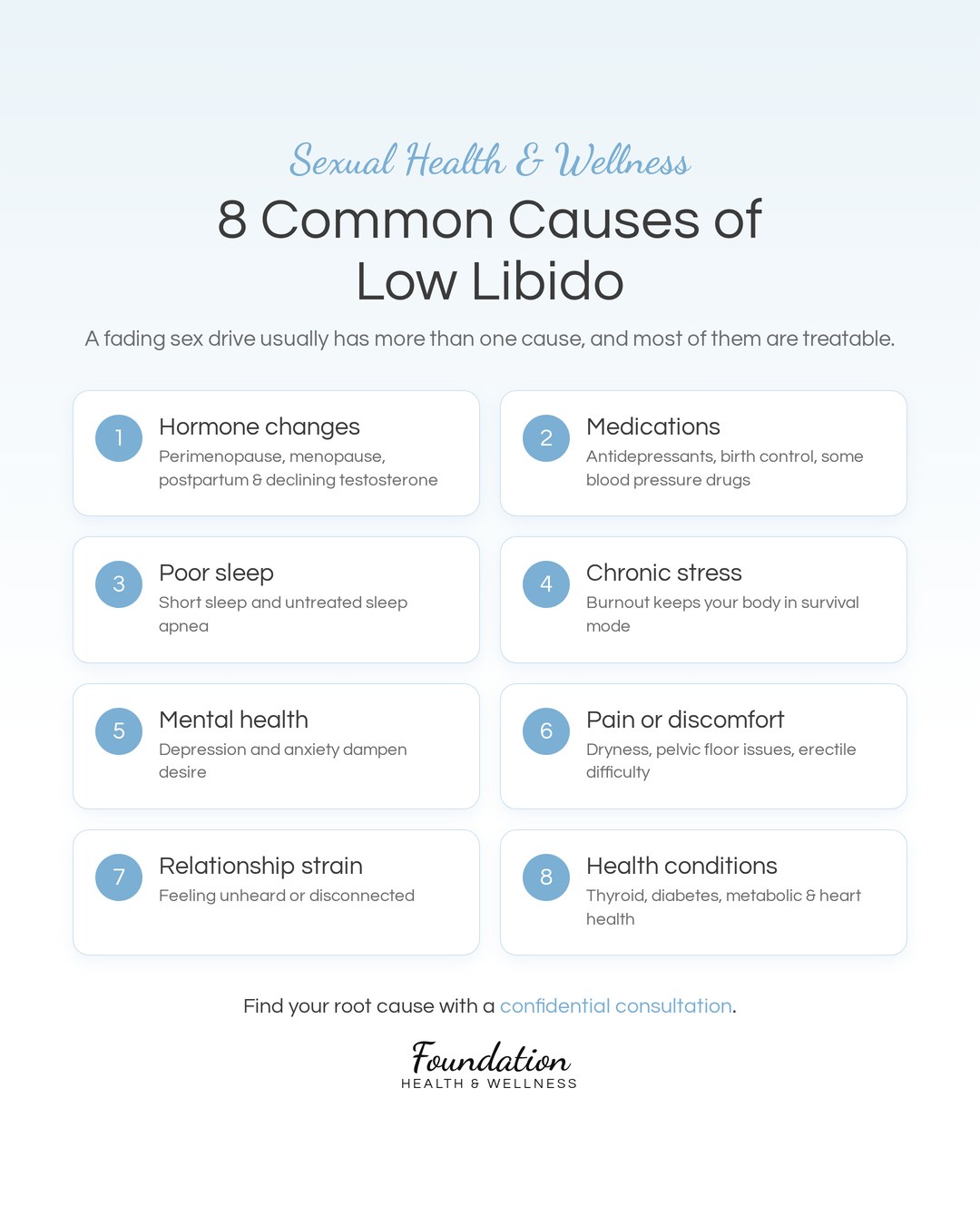
A low sex drive rarely has a single cause. It usually comes from several things at once: hormones, medications, physical health, sleep, stress, mental health and relationship factors. The most common causes are:
- Hormone changes. These include perimenopause, menopause, postpartum shifts and declining testosterone.
- Medications. Antidepressants, hormonal birth control and some blood pressure drugs are common culprits.
- Poor or insufficient sleep. This includes untreated sleep apnea.
- Chronic stress and burnout. Long-running stress keeps your body in survival mode.
- Mental health. Depression and anxiety can dampen desire.
- Pain or discomfort during sex. Vaginal dryness, pelvic floor issues and erectile difficulties can all make intimacy something you’d rather avoid.
- Relationship strain. Unresolved conflict, poor communication or feeling disconnected from your partner can quietly lower desire.
- Underlying health conditions. Thyroid disorders, diabetes, metabolic syndrome, heart disease and obesity all affect desire.
Low libido in women
Hormonal transitions are a major driver of low libido in women. Estrogen and progesterone fluctuate during perimenopause and then drop at menopause. Testosterone, which women also make and need, declines gradually over the years. These shifts can reduce desire directly. They can also cause vaginal dryness, hot flashes and poor sleep, which make intimacy uncomfortable or simply unappealing.
Life stage matters, too. Postpartum recovery, breastfeeding, caring for young kids or aging parents, and demanding careers can leave little energy for desire.
Low libido in men
Low libido in men is often linked to low testosterone, but not always. Testosterone declines naturally with age, and excess weight, poor sleep, heavy alcohol use and certain medications can lower it further. Erectile dysfunction also plays a big role. When performance becomes unpredictable, many men start avoiding intimacy altogether, and desire fades with it. That’s why low libido in men and ED are best evaluated together.
How Do Estrogen, Progesterone and Testosterone Affect Sex Drive?
These three hormones work together, and when one falls out of balance, desire often shifts:
| Hormone | What it does for sexual health | What can happen when it’s low or out of balance |
|---|---|---|
| Estrogen | Keeps vaginal tissue healthy, supports natural lubrication and blood flow | Vaginal dryness, thinning tissue, painful intercourse, lower arousal |
| Progesterone | Supports sleep and mood and balances estrogen | Poor sleep, irritability and anxiety that can indirectly lower desire |
| Testosterone (women and men) | Drives sexual desire, arousal and energy; supports erectile function in men | Low desire, fatigue, less satisfaction; in men, weaker erections |
If My Hormone Levels Are “Normal,” Can Hormones Still Be the Problem?
They can. A “normal” lab result doesn’t always mean optimal for you. Reference ranges are wide, and they’re based on population averages rather than on how you personally feel. A single test taken at the wrong time of day, or at the wrong point in your cycle, can also miss the full picture.
That’s why a thorough evaluation weighs your lab results together with your symptoms, history, medications and goals, instead of looking at one number on its own. We wrote more about this in Why Your Provider Says “Your Labs Are Normal” – But You Still Feel Awful.
From Jalayne: “I often see patients for hormone consultations who have been told by their doctor or another provider that their labs look normal, but they still know something isn’t right. It’s that brain fog, that lack of energy they feel on a daily basis. Because our approach at Foundation is to take the time to listen to every patient and understand what they’re experiencing, we can offer solutions to that ‘off’ feeling.”
Which Medications Can Lower Sex Drive?
Some of the most common prescriptions can affect desire, arousal or performance, including:
- Antidepressants, especially SSRIs and SNRIs
- Hormonal birth control, which can lower available testosterone in some women
- Certain blood pressure medications, such as some beta-blockers and diuretics
- Anti-androgen medications and some prostate treatments
- Opioid pain medications
- Some anti-seizure and antipsychotic medications
Please don’t stop or change any medication on your own. Often there’s an alternative, a dose adjustment or a complementary treatment, but those decisions should be made with your prescribing provider.
How Do Sleep, Stress, Mental Health, Pain and Relationships Play a Role?
Desire depends heavily on your overall well-being. When your body is exhausted or on high alert, reproduction and pleasure fall to the bottom of its priority list.
- Sleep: Chronic short sleep lowers testosterone and drains energy and mood. Snoring or waking up unrefreshed can point to sleep apnea, which is worth ruling out.
- Stress: Long-term stress keeps cortisol elevated and your nervous system in “fight or flight,” the opposite of the relaxed state arousal needs.
- Mental health: Depression and anxiety commonly reduce desire, and so do some of the medications used to treat them. Both deserve attention.
- Pain: If sex hurts, your brain learns to avoid it, and desire drops to protect you. Treat the pain, and desire often starts to return.
- Relationships: Feeling unheard, unappreciated or disconnected from your partner can quietly shut desire down. Sometimes the most effective “treatment” includes counseling or a sex therapist alongside medical care.
What Are the Treatment Options for Erectile Dysfunction?
Erectile dysfunction (ED) is common and treatable. It can also be an early warning sign of cardiovascular disease, because erections depend on healthy blood vessels. That’s one more reason to get evaluated rather than ordering pills online. The American Urological Association recommends a full health assessment as part of ED care (AUA Erectile Dysfunction Guideline).
Common options include:
- Oral medications (PDE5 inhibitors). Tadalafil (Cialis) can be taken daily or as needed and lasts up to 36 hours. Sildenafil (Viagra) typically works within 30–60 minutes and lasts about 4–6 hours. At Foundation, we can fill these prescriptions right in our office, so you leave with a plan and your medication in hand.
- Testosterone optimization, when lab testing confirms low levels.
- Lifestyle and metabolic support, such as weight loss, blood sugar control, better sleep and less alcohol, which improves blood flow and hormone balance.
- Referral to urology for other therapies when appropriate.
What Helps Vaginal Dryness or Painful Intercourse?
Vaginal dryness and painful intercourse are extremely common during perimenopause and after menopause. The North American Menopause Society calls this group of symptoms genitourinary syndrome of menopause. Unlike hot flashes, these symptoms usually don’t go away on their own, but they respond well to treatment (The North American Menopause Society, 2020).
Options include:
- Vaginal moisturizers and lubricants for day-to-day comfort
- Low-dose vaginal estrogen, which restores tissue health locally
- Bioidentical hormone therapy (BHRT), when broader menopause symptoms are also present
- Vaginal rejuvenation and moisture therapy, available at Foundation
- Pelvic floor support, for tightness, pain or weakness that makes intimacy uncomfortable
Low Libido Treatments Compared
| Treatment | Best suited for | How it helps | Available at Foundation |
|---|---|---|---|
| Bioidentical hormone therapy (BHRT) | Perimenopause/menopause symptoms, hormone imbalance | Restores estrogen/progesterone balance; eases dryness, sleep and mood issues | ✔ Pellets, creams, troches |
| Testosterone optimization | Confirmed low testosterone (men); select postmenopausal women with low desire | Supports desire, energy and, in men, erectile function | ✔ Pellets, creams, injections |
| ED medication (tadalafil, sildenafil) | Erectile dysfunction | Improves blood flow for erections | ✔ With in-office fulfillment |
| Vaginal moisture therapy & local treatments | Dryness, painful intercourse | Restores comfort so intimacy feels good again | ✔ |
| Pelvic floor support | Pelvic pain, tightness or weakness | Reduces discomfort, improves confidence | ✔ |
| Medication review | Desire changes after starting a new prescription | Identifies alternatives or adjustments with your prescriber | ✔ |
| Sleep, stress & metabolic support | Fatigue, burnout, weight or blood-sugar concerns | Addresses root causes that suppress hormones and energy | ✔ Nutrition & lifestyle guidance |
| Counseling / sex therapy | Relationship strain, anxiety, past trauma | Rebuilds connection and reduces anxiety | Referral |
When Is Hormone Therapy the Right Choice?
Hormone therapy for a low sex drive may be worth considering when:
- lab testing and your symptoms point to a hormone imbalance
- low desire comes with other hormone-related symptoms, such as hot flashes, night sweats, poor sleep, brain fog, fatigue or vaginal dryness
- you’re in perimenopause, menopause or andropause (age-related testosterone decline)
- other causes, such as medications, thyroid issues or sleep problems, have been ruled out or addressed
Hormone therapy isn’t right for everyone. Some health histories call for a different approach, and every plan needs follow-up testing and monitoring. If you’re curious about delivery methods, read The Best Hormone Therapy: Hormone Pellets vs. Injections vs. Creams, or learn more about our hormone replacement therapy approach.
What Happens During a Confidential Sexual Health Consultation?
We know this can feel like a hard conversation to start, so we make it easy. At Foundation Health & Wellness, a sexual health visit usually includes:
- A private, unhurried conversation. We’ll talk about what’s changed, when it started, what you’ve tried and what you want your life to feel like. No judgment, and no question is too awkward.
- A full-picture health review. This covers your medications, sleep, stress, cycle or menopause stage, and any pain or performance concerns.
- Targeted lab testing. This typically covers hormones and relevant metabolic markers, interpreted in light of your symptoms and not just the reference range.
- A personalized plan. Your plan may combine hormone optimization, ED or vaginal treatments, lifestyle support and, when helpful, a referral to a trusted counselor or specialist.
- Ongoing follow-up. We’ll adjust as your body responds, so you’re never left guessing.
The Bottom Line
Low libido in women and low libido in men are both common and real, and a low sex drive is usually treatable once you find the cause. Whether the cause is hormones, medications, pain, stress or several of these at once, you deserve a provider who listens, tests thoroughly and builds a plan around you.
You don’t have to navigate this alone. Our Albuquerque team offers compassionate, science-backed sexual health care for women and men. Learn more on our Sexual Health & Wellness page or book your confidential consultation today. Confidence begins with care.
Frequently Asked Questions
What is the best treatment for low libido?
It depends on the cause. Hormone therapy helps when hormones are out of balance, ED medication helps when erectile difficulty is the issue, and local treatments help with vaginal dryness. Sleep, stress and relationship support help when those are the drivers. A thorough evaluation identifies the right starting point.
Can low libido be caused by hormones even if my labs are normal?
Yes. Reference ranges are broad, and timing affects results. A provider should interpret your labs alongside your symptoms rather than relying on a single number.
Does testosterone help women with low libido?
Research supports testosterone therapy for postmenopausal women with low desire that causes distress, when it’s prescribed at appropriate doses and monitored by a provider.
Can birth control or antidepressants lower sex drive?
They can. Hormonal contraceptives and SSRI/SNRI antidepressants are common contributors. Talk to your provider before changing anything, because there are often good alternatives.
Is low libido a normal part of aging?
Changes in desire are common with age, but losing your sex drive isn’t something you simply have to accept. Many age-related causes, such as menopause, low testosterone, dryness and poor sleep, are treatable.
Do I need a referral to see Foundation for sexual health concerns?
No. You don’t need a referral. You can book a confidential consultation directly online.
This article is for educational purposes and isn’t a substitute for personalized medical advice. Talk with a qualified healthcare provider about your specific symptoms and treatment options.